
Gendered Pathways: A Play in 6 Monologues
I wrote a play for class :)
Valicia Carmen
12/2/202510 min read
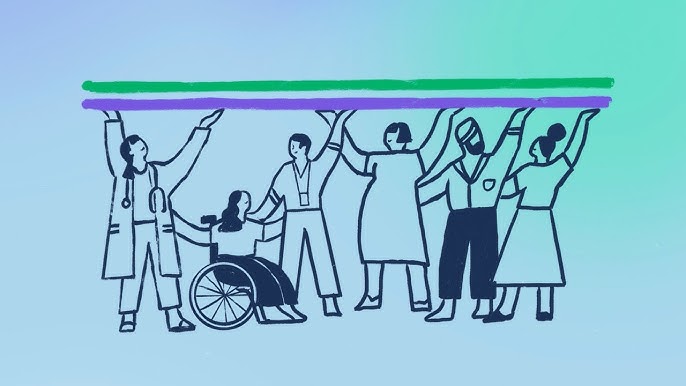
I wrote Gendered Pathways is a verbatim theatre play born from a simple question: How does gender shape the way people move through healthcare systems around the world?
Inspired by four qualitative public health studies, the play brings real voices to the stage: voices of patients who described, in their own words, what it felt like to be dismissed, delayed, judged, or afraid when seeking medical care. While statistics reveal the scale of gender disparities, they rarely convey the human cost of these tribulations the way that storytelling does.
The Play
Structured as a series of eight intimate monologues, Gendered Pathways follows six characters—three women and three men, ages 14 to 65—across Australia, Kenya, Malaysia, and the United States. Their stories reveal how gendered expectations and biases accumulate over a lifetime.
For women, the barriers are often external: disbelief, medical gaslighting, and a healthcare system that routinely dismisses their pain.
For men, the barriers tend to be internal and structural: pressure to appear strong, fear of judgment, financial strain, and a lack of private or male-friendly spaces to seek help.
Why I Wrote This
In public health, we often rely on data to illustrate inequities, believing that numbers are irrefutable, drivers of change. But behind every statistic is a story, and those stories can spark reflection in ways numbers would never be able to. I wrote this play to bring those hidden narratives to life and to honor the people who shared their experiences in qualitative research.
My primary audience is healthcare professionals, clinicians, medical students, nurses, public health practitioners, because they hold real power to reshape patient experiences. By hearing these monologues directly, I hope they will recognize how ordinary interactions can become life altering moments of harm or healing.
Ultimately, Gendered Pathways is both a mirror and a call to action: a reminder that gendered barriers to care are not isolated incidents, nor the fault of individual patient; they are global, systemic public health failures that demand empathy, awareness, and change.
Gendered Pathways : A Play in 8 Monologues
by: Valicia Carmen
Characters and Settings
CHLOE (23): A 23-year-old woman in Australia with Ehlers-Danlos syndrome (EDS) and POTS.
RAHIM (31): A 31-year-old man in Kelantan, Malaysia.
SARAH (32): A 32-year-old woman in the United States with undiagnosed endometriosis.
ANNA (45): A 45-year-old woman in Australia with multiple chronic conditions.
DAVID (47): A 47-year-old man in Kenya and a father.
SAMUEL (65): A 65-year-old man in Kelantan, Malaysia.
(CHLOE sits g on the floor of her apartment in Australia. She looks exhausted.)
CHLOE: My problems started when I was a kid. But you try to tell anyone that, and they just... look at you. My mom was like… "Periods are painful. You're going to have to deal with that. I'm sorry, you're a woman". And my friends? They’re just like, "Come on, take some ibuprofen, you're fine... I have bad cramps too". So I genuinely just felt like I was being a big baby. But it's not just cramps. I go to the doctor, I go to the ER a bunch of times, and they don't listen. They just tell me I'm "too young" to be experiencing these symptoms. One doctor, when I kept fainting, he looked at me and said, "Because of my age I must be bulimic". Another one told my mom it’s "just anxiety". They say here in the U.S., the average time to get a diagnosis for someone my age is over 11 years. I came to a point... I was like, actually no, this pain is not okay. These things that I'm living with are not okay and that is when I finally sort of switching doctors until I knew I found the right one. It was just such an arduous journey. And we're like, Is this the end of the road? I don't know... I was kind of at the end of the road like I was so worn out."
(RAHIM stands outside a clinic in Kelantan, Malaysia, checking his watch. He is visibly annoyed.)
RAHIM: I come here in the morning, and in the afternoon, I am still not finished. I look... there are not many people, two to three patients only. But I still wait. More than an hour. Why? Because the healthcare providers... they are chit-chatting with each other. The patient’s document is just sitting there. After they finish, they take the health card. Then I go to the counter, and the staff looks... "egoist". Like they do not want to entertain you, as we just pay 1 Ringgit at the clinic. And the waiting area... it is mixed, for men and women. The majority who sit are women. We men feel very uncomfortable. You see children making noise, crying... you feel like, just get out and go home. There is no free Wi-Fi, no good phone coverage. No coffee or water. And the parking... there is no parking space. You have to park far away. Then you go inside, and the consultation room is narrow, you share it with another patient. There is even a sign on the door warning you not to take a long time. How can you feel comfortable?
(SARAH is at her kitchen table in the United States, surrounded by papers. She is determined.)
SARAH: I bled for three and a half months. Straight. When I went in, they told me it's "perfectly normal". That’s when I started to feel like I was actually crazy. You go to so many providers , you get so many misdiagnoses. You lose sexual intimacy with your husband, it just feels like "a chore". You're grieving this infertility, this "arduous journey" , and you’re like, "Why can't I just enjoy my life?". And they just... trust the doctors. I wish I had been more forceful, but I just trusted them. It’s so isolating. I realized I did not know how to speak up for myself medically. So I had to become my own researcher, my own self-advocate. I’m the one who has to connect the dots. People are spending thousands of dollars and putting their bodies through like a lot of trauma, both physically and emotionally... I would hope that providers would become more informed.
The pain, the heavy periods, the GI upset , the fact I had to give up my dream of being a ballerina because I couldn't practice , the struggle just to get up and go to work. My whole quality of life... impacted in a major way. I had sepsis, and I had no idea because I'm in pain all the time, and I didn't know that I was actually so sick. And when I finally... finally... got a diagnosis? I was just... glad. Glad to know I wasn't crazy. That there's a name to them. It gave me incredible peace of mind. And now, I will be an advocate for my girls. I will teach them to be advocates for their body, because of this journey.
(ANNA is in her home in Australia. She speaks slowly, as if with great effort.)
ANNA: My life... it's been derailed. The pain is... excruciating. The suffering... it doesn't give me one second break. It's equivalent to torturing someone. But the biggest symptom for me is the fatigue. And doctors... they just do not understand fatigue. They don't get it. They see this chronic pain issue and they're judgmental. My GP coaxed me to have a "trial without any medications". You learn to just deal with it yourself. You don't really feel like you can live day-to-day like most people. If I'm able to make myself food, then I feel like that's a good day. I managed to keep working, but it was at the expense of a social life. I was... I am... very socially isolated. It’s really affected my identity, my self-identity. I found a support group, which helps. But then you hear about the negative experiences your friends have had, and you just... you feel depleted. You just... kind of accept that this is life. You just have to find ways to dig deep and push through.
I’ve had such rare conditions that people in the Australian health system just... they look at my chart and go, "Well, she must be making it up". It’s been 20 years of medical records saying there's nothing wrong with me, that I'm "basically making it up". When I was 19, a homeopath... a homeopath... was the one who finally took my blood pressure and said, "A 19-year-old should not be doing this, you go back and ask for a cardiologist". The "real" doctors? They’re the ones who traumatize you. I had a paramedic lean over me during a seizure and say, "Stop it. I know you are faking this". I've been accused of purposely taking diuretics. My last discharge summary, my official diagnosis was "Hysteria". Imagine how that feels? The gaslighting is implicit. They say, "Your tests came back okay, so you must be okay". But you're not. They sent me home from the hospital while I was still paralyzed. They weren't giving me anything for the pain. You feel like you have to go "doctor shopping" , but then they label you a "drug seeker". It's pushed me to psychological crises. Now? We have literally stopped calling 000 [emergency services]. I am at more risk of harm in a hospital from people who don't follow basic protocols than I am at home. I just want to feel safe going to a doctor. I really am petrified of doctors.
(DAVID is at home in Kenya.)
DAVID: A man may be unwell. At the same time, his wife and family are unwell. Because he doesn't have money, he will pay for their bill, and he will stay unwell. He has other responsibilities. Most of us work as jua kali... low wage labor. In a month, maybe you get 500 shillings. You have school fees for the children. So you can't go to hospital. You will instead turn to herbal treatment... they think the traditional one is cheaper. For a man to go to the hospital, it is his last option. We feel left out. Here in Kenya, I look at the notice boards in the clinic, the government has been focusing more on women. We see women are registered with Linda Mama—Care for women. We want the government to register men with Linda Wazee—Care for men. We need screening services for chronic illnesses. We need cancer screening that focuses on men. We need counselling. We need mental health support. We need male-specific clinic days. But the staff attitude... their unwillingness to serve people... they just leave us behind.
(SAMUEL is in a clinic in Kelantan, Malaysia. He looks around nervously before speaking.)
SAMUEL: I saw a man here. He had an STI. It was hard for him to explain to the female healthcare worker. He was embarrassed. So he decided to lie. He told her he had a headache. He left with nothing. For an older man... if you come here, you feel challenged because the person you are telling looks like your child. And traditionally, it is not good for a man to undress and show her his private parts. So if you find a woman, you pretend that you are not sick, and you go back. And the privacy... there is no privacy. The waiting room is so close to the consultation room... a patient on the bench can hear everything. The area is narrow, another patient sits right next to you, too near. When you leave, you will hear the news everywhere. Some providers... they spread information about patients. I was scolded by a nurse once. An older man, walking slow. She raised her voice: "Where did you go? Don't you hear me calling?". There are gaps between us and them. We are not from their level. I was not even informed of my urine sample results. I was afraid to ask. Sometimes, I just go to the "unqualified consultant" who sells products. At least he will listen.
ALL CHARACTERS sit a large table. Post its and notebooks and papers are scattered across the desk. SARAH stands at the head of the able, EXPO marker in hand, ready to document their ideas on the large white board. They speak in turns, their voices practically overlapping at times, each with an urgency to be heard.
SARAH: I want someone to hear this story. It’s important for people to know.
DAVID: We are very ignorant about our health. Education has to sensitize.
RAHIM: We need outreach programs! In the community, at the coffee shop, at the mosque. Use Dikir Barat! Use sports! Use karaoke!
SAMUEL: Use threatening words, maybe. No, use positive, soft words.
RAHIM: Use social media! Update the community!
DAVID: Give us short talks on health in the waiting area.
SARAH: We need doctors who are "happy to do some reading".
ANNA: We need education, all round. There's no money going into pain research.
CHLOE: Our frontline needs a lot more training.
SAMUEL: I want a good listener. A provider who always has a smile.
SARAH: Someone who is less judgmental, more empathetic.
DAVID: We need confidential sexual health services.
SAMUEL: And a specific room, handled by "veteran staff... who can keep secret". Maybe rebrand the service, to reduce the stigma.
RAHIM: And can the administration be fast and proper? Give us an estimated waiting time!
DAVID: And an ambulance at the clinic.
RAHIM: And extend the service time to the weekend!
SAMUEL: I just want a men-only waiting area.
RAHIM: Maybe a massage chair?
DAVID: Just a children's playground would be nice.
CHLOE: (Quietly) I just... I want to feel safe.
SARAH: (Nodding) I want a doctor who will be my advocate.
ANNA: A doctor who won't just... give up.
CHLOE: I just... I don't want to be "too young".
ANNA: I just don't want to be "crazy".
SAMUEL: I just don't want to lie about a headache.
DAVID: I just... don't want to be the last option.
CHLOE, RAHIM, ANNA, SAMUEL, DAVID, SARAH: I just want to be healthy.
RAHIM: AND HEARD!
References
Ab Aziz, M. Z., Tengku Ismail, T. A., Ibrahim, M. I., Yaacob, N. M., & Mohd Said, Z. (2022). Experiences and Expectations of the Characteristics of Friendly Primary Health Services from the Perspective of Men: A Phenomenological Qualitative Study. International Journal of Environmental Research and Public Health, 19(19), 12428. https://doi.org/10.3390/ijerph191912428
Debolt, S. C. (2023). Women's Stories of Reaching a Diagnosis of Endometriosis: A Qualitative Study [DNP Scholarly Project, Belmont University]. Belmont Digital Repository. https://repository.belmont.edu/dnpscholarlyprojects/80
Merone, L., Tsey, K., Russell, D., & Nagle, C. (2022). "I Just Want to Feel Safe Going to a Doctor": Experiences of Female Patients with Chronic Conditions in Australia. Women's Health Reports, 3(1), 1016–1028. https://doi.org/10.1089/whr.2022.0052
Mokua, S. N., Ombogo, L., Mathu, D., Otambo, P., Nyandieka, L., Onteri, S. N., Mbuka, S. J., Kariuki, J., Ahmed, I., Wanjihia, V., Mutai, J., & Bukania, Z. (2024). "For a man to go to hospital, then that would be his last option": A qualitative study exploring men's experiences, perceptions and healthcare needs in the implementation of Universal Health Coverage in Kenya. PLOS Global Public Health, 4(5), e0002925. https://doi.org/10.1371/journal.pgph.0002925